Speech & Drama offers creative, educator-led sessions where young people build confidence in their voice, communication, and presence through drama, movement, storytelling, and performance. Classes are small, supportive, and designed to feel engaging and achievable. No prior experience is required.
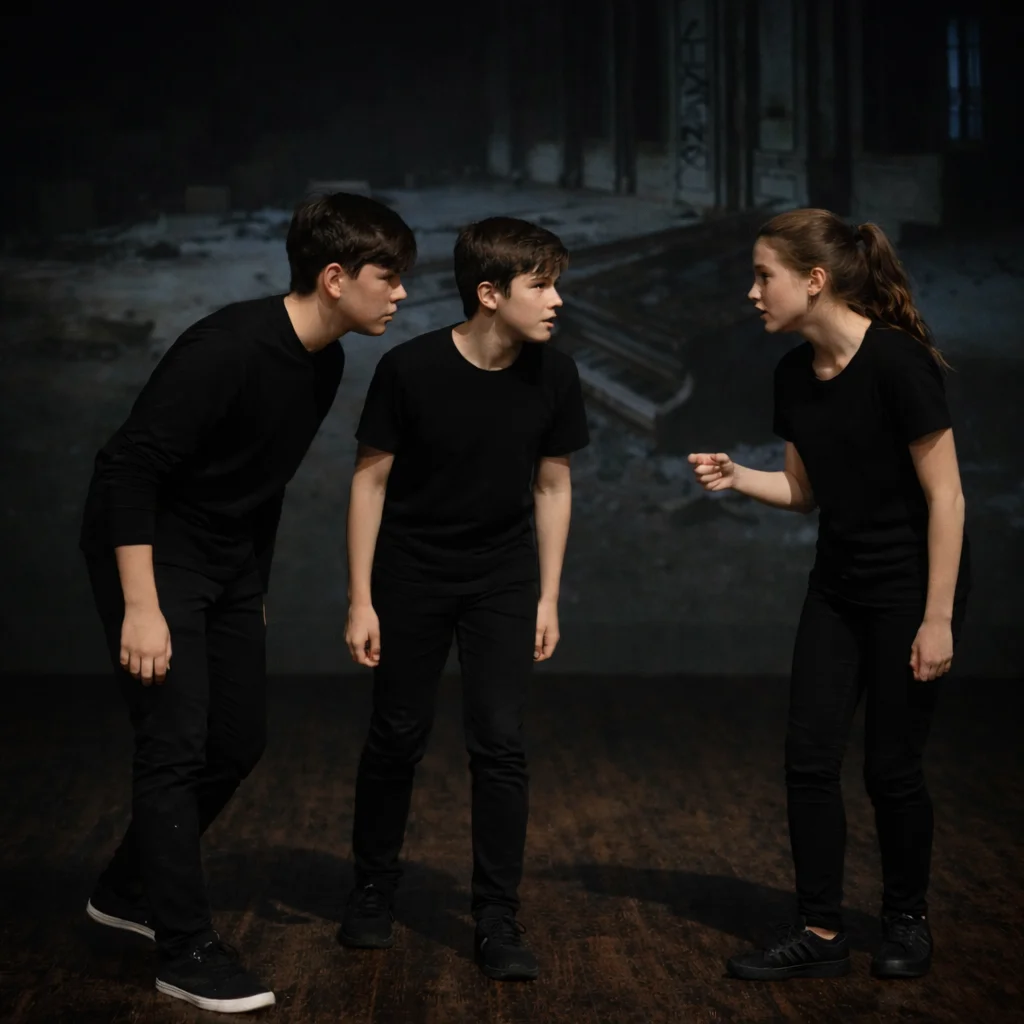
What a Session Looks Like
Sessions move through the creative practice of brainstorming and exploring ideas, improvising and experimenting, and rehearsing, refining, sharing, and reflecting.
- 1 Warm-up — voice, movement, focus
- 2 Guided activity — skill focus
- 3 Drama games and improvisation
- 4 Creative task — short scene work or poetry
- 5 Reflection
Over time, students develop clearer speech, growing confidence, stronger collaboration skills, and creative thinking — skills for life.
Our Progression Pathway
A structured creative studio where students move through a supported journey, growing confidence and building skills across voice, movement and performance. Placement is guided by age, readiness and experience.
-
Explore
Creative Speech & Drama, and Theatre Sports
A playful, energetic class building strong foundations in improvisation, voice, movement and teamwork. Students develop confidence, clarity and stage presence. Includes Theatre Sports — high-energy improv games focused on spontaneity, collaboration and creative thinking. -
Extend
Extension Speech & Drama
For students ready to deepen their craft through more structured rehearsal, character development and performance work. -
Perform
Performances
Students share their work in a supportive performance setting, with opportunities to take on more advanced performance work as the studio grows.
What We Explore
Drama & Performance Skills
- Creating characters and roles
- Improvisation and role-play
- Devising short scenes and group performances
- Using movement, gesture, and space
Voice & Expressive Speech
- Vocal warm-ups and breathing
- Speaking clearly and with intention
- Exploring volume, pace, pitch, and tone
- Expressive reading and storytelling
Confidence & Communication
- Sharing ideas in a group
- Listening and taking turns
- Speaking in front of others in a supported way
Elements of Drama
- Mood and atmosphere
- Focus and attention
- Character and relationships
- Voice and movement
Creativity, Culture & Story
- Traditional, contemporary, and cultural stories
- First Nations storytelling
- Myths, legends, and imaginative worlds
Practical Information
What to Bring
- Comfortable clothing
- A clearly labelled water bottle
- Optional: clear A4 folder for handouts
All learning materials are provided by Ranges Studio.
Shared Agreements
- Safety first, always
- We respect ourselves and others
- We respect the studio and its environment
- We have fun!
Why Speech & Drama?
Drama is an engaging and active way to learn. It allows young people to express thoughts, feelings, and ideas, while building trust through group work and encouraging individuality, originality, and creativity. Through drama, learning is brought to life. Students explore different perspectives, develop empathy, and strengthen communication skills in meaningful and enjoyable ways.